HSH1000 · The Human Condition
Self or Duty?
What should we do when our values clash with our family or country?
Huy · Emma · Dillion · Shervon · Yunxian
Our question
To what extent should individuals uphold their personal values when these conflict with their obligations to family or nation?
Personal values
Family · Nation
The texts
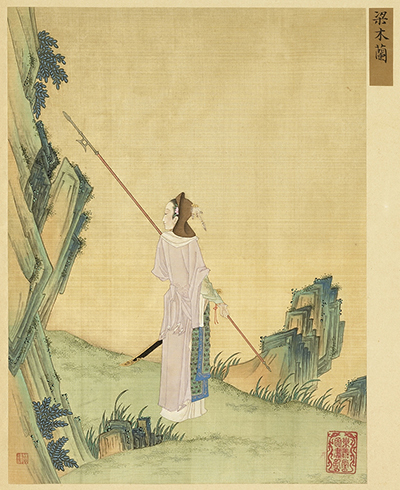
Mulan
Takes her father’s place in the army
Family duty vs. gender roles
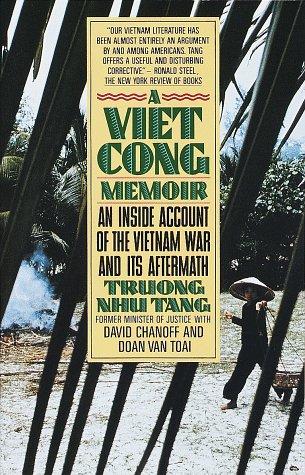
A Vietcong Memoir
Truong Nhu Tang leaves the revolution he helped lead
National loyalty vs. conscience
Images: Hua Mulan from Gathering Gems of Beauty (Qing dynasty, public domain); book cover, Vintage edition (1986).
Thesis
We should honour our obligations as long as they uphold the values that make loyalty meaningful.
If they don’t, resisting them can be an act of integrity.
But we also need to question our own beliefs.
Outline
1
Duties can be wrong
Mulan
2
Loyalty has limits
A Vietcong Memoir
3
We can be wrong too
Our own values
Obligations
Our duties to others matter, but we can still question them
Gives us a sense of purpose
So being true to yourself doesn’t automatically come first.
Mulan
Mulan breaks tradition to save her father
Duty: protect the family
What society expects
Stay home, obey
Mulan’s choice
Fight in his place
She rejects society’s expectations but stays committed to her family.
Mulan
Individuality vs. family
A “good” daughter
≠
A caring daughter
It is more complicated than choosing between yourself and your family.
A Vietcong Memoir
Loyalty becomes questionable when institutions betray their values
TNT’s faith in the party, over time
Commitment
Victory · 1975
Repression
Disillusionment
A Vietcong Memoir
Loyal to the cause ≠ loyal to the party
Loyalty kept
Loyalty withdrawn
A Vietcong Memoir
If a movement breaks its own promises, obeying it can undermine the reasons you joined.
For TNT, questioning the party meant giving up his identity as a loyal revolutionary.
What was my loyalty based on, and is it still justified?
Counterargument
But personal values can be wrong
“I’m just being true to myself”
Selfishness
Inflexibility
If we never question our values, we can use them to justify being selfish or stubborn.
Growth and self-correction
Integrity isn’t the same as refusing to change
My values
Experience
Do they work in real life?
Others
Who do they affect?
Responsibilities
What else do I owe?
Keep or revise
Growth and self-correction
It is okay to change your mind when you realise something is wrong.
Both Mulan and TNT revised what they were taught to accept.
Evaluation
So when should we conform?
Does conformity still serve a morally defensible purpose?
No (exclusion, repression)
Challenge it
In both cases, we should still be willing to question ourselves.
Conclusion
Our loyalty should depend on the values behind it
Mulan
Keep the duty, question its definition
TNT
Keep the cause, leave the party
Ourselves
Keep questioning our own convictions
References
Bancroft, Tony, and Barry Cook, dirs. Mulan. Burbank, CA: Walt Disney Pictures, 1998.
Truong Nhu Tang, with David Chanoff and Doan Van Toai. A Vietcong Memoir. San Diego: Harcourt Brace Jovanovich, 1985.
Images
Hua Mulan, from Gathering Gems of Beauty (畫麗珠萃秀). Qing dynasty album leaf. Public domain, via Wikimedia Commons.
Cover of Truong Nhu Tang, A Vietcong Memoir. New York: Vintage Books, 1986. Via Open Library.
Thank you
Questions?